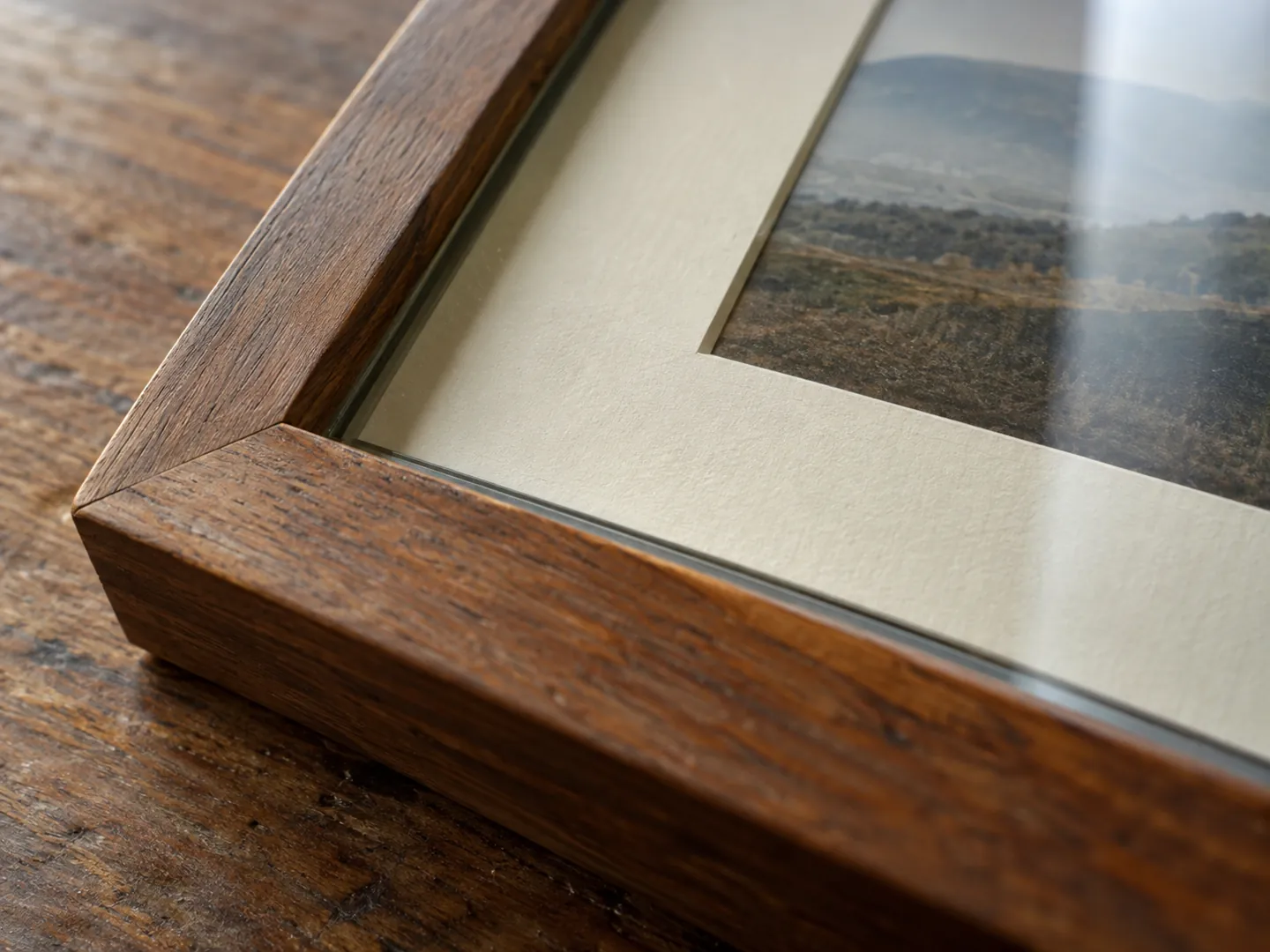
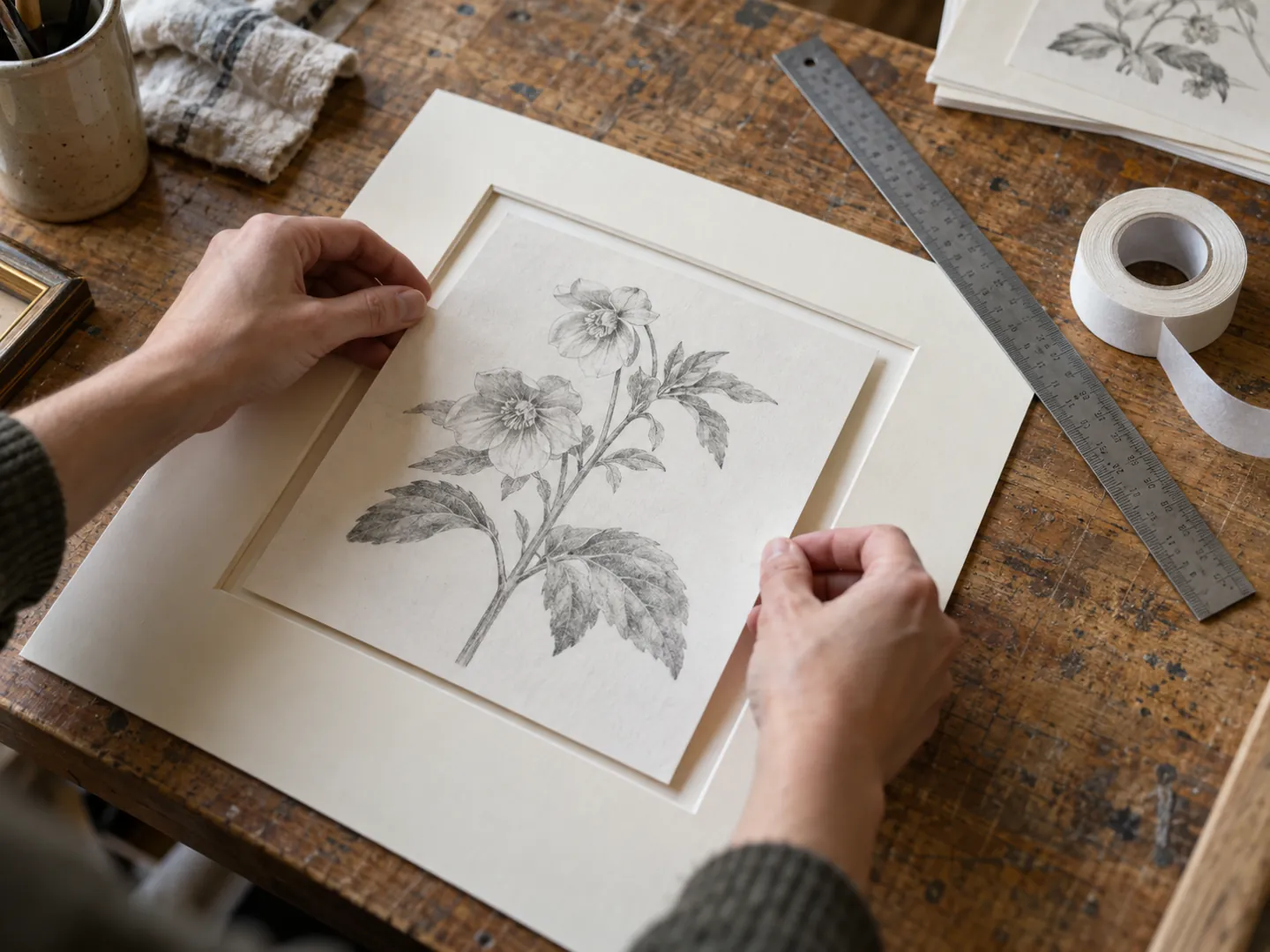
Conservators at the Institute of Conservation and The National Archives point to the same few things: the board around the picture, how it is attached, the glazing in front of it, and the wall it hangs on.
Pick a kind of light to see how quickly the most light-sensitive colours, such as some watercolours and inks, can start to visibly fade. The bar shows the risk.
Figures from the Canadian Conservation Institute for high-sensitivity materials, assuming about 3,000 hours of light a year. Many pictures fade more slowly.
TWO NUMBERS WORTH KNOWING
Light adds up, and it never goes back.
One figure museums light paper to, one on how much faster sunlight works.
50 lux
Light level for works on paper
The Canadian Conservation Institute says 50 lux is the traditional museum level for works on paper, watercolours and photographs, and enough for full colour vision for a young viewer. Average daylight is about 30,000 lux.
MUSEUM BENCHMARK · CCI
≈ 1,000× faster
Damage rate, sunlight vs museum light
The CCI says the rate of light damage rises about a thousand times from good museum levels to sunlight.
SUNLIGHT · CCI
The Institute of Conservation describes light damage as cumulative and irreversible. The CCI adds that UV often causes less than half of fading, so UV-filtering glass helps but does not stop it.
FOUR QUESTIONS FOR THE FRAMER
Good framing, in four questions.
These come from the conservation framing checklists published by the Institute of Conservation and The National Archives. Any framer should be able to answer them.
Is the mount museum or conservation board?
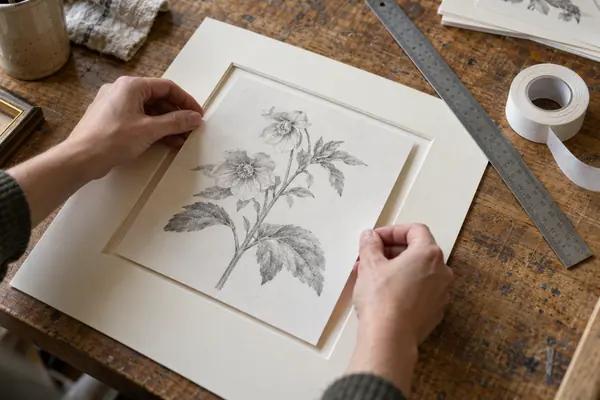
Solid-core 100% cotton museum board is best; purified-woodpulp conservation board is the alternative. Avoid plain card.
How will the picture be held?
Look for acid-free paper hinges with a water-soluble adhesive, or photo corners. Never self-adhesive tape.
Will the glazing touch the picture?
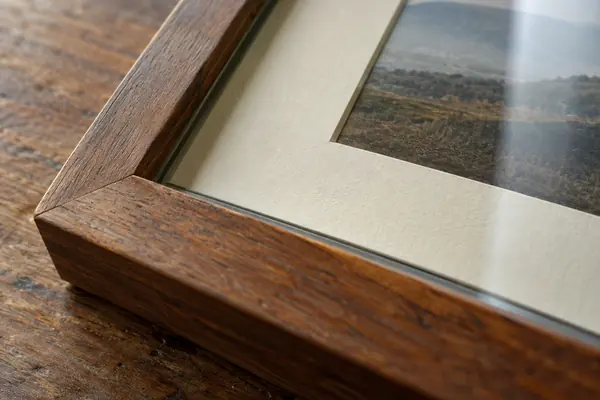
A window mount or spacers should hold the glass or acrylic away from the surface. Ask for UV filtering.
What is behind it?
An isolating layer should separate the mount from any hardboard backing, with hanging fittings fixed to the frame, not the backboard.
AI-generated image, not a photograph of a real person or place.AI-generated image, not a photograph of a real person or place.
TAPE AND OLD FRAMES
Look at the back of old pictures.
Self-adhesive tape is one of the commonest problems: the Institute of Conservation says its adhesive creeps into the paper and stains it, and that commercial tapes used to mend tears do more harm than good.
The US Library of Congress suggests a further option for a treasured piece: keep the original stored flat and dark, and hang a good reproduction instead, because long-term display causes fading, yellowing and brittleness that cannot be reversed.
Questions
Questions people ask
What is the difference between museum board and conservation board?
The National Archives describes museum board as solid-core 100% cotton board, the best quality. Conservation board is made from purified woodpulp and is the alternative. Both avoid the acidic woodpulp in ordinary card, which can stain and brown paper.
Is UV-filtering glass enough to stop fading?
It helps but does not stop it. The Institute of Conservation highly recommends UV-filtering glass or acrylic, but the Canadian Conservation Institute says UV usually causes less than half of fading in sensitive colours, so keeping the light low matters too.
Should I choose glass or acrylic?
Acrylic is light and unlikely to break, but it scratches more easily and builds up static. The Institute of Conservation says it should never be used to glaze pastels, chalks, charcoal or other powdery media.
Where is the best place to hang a picture?
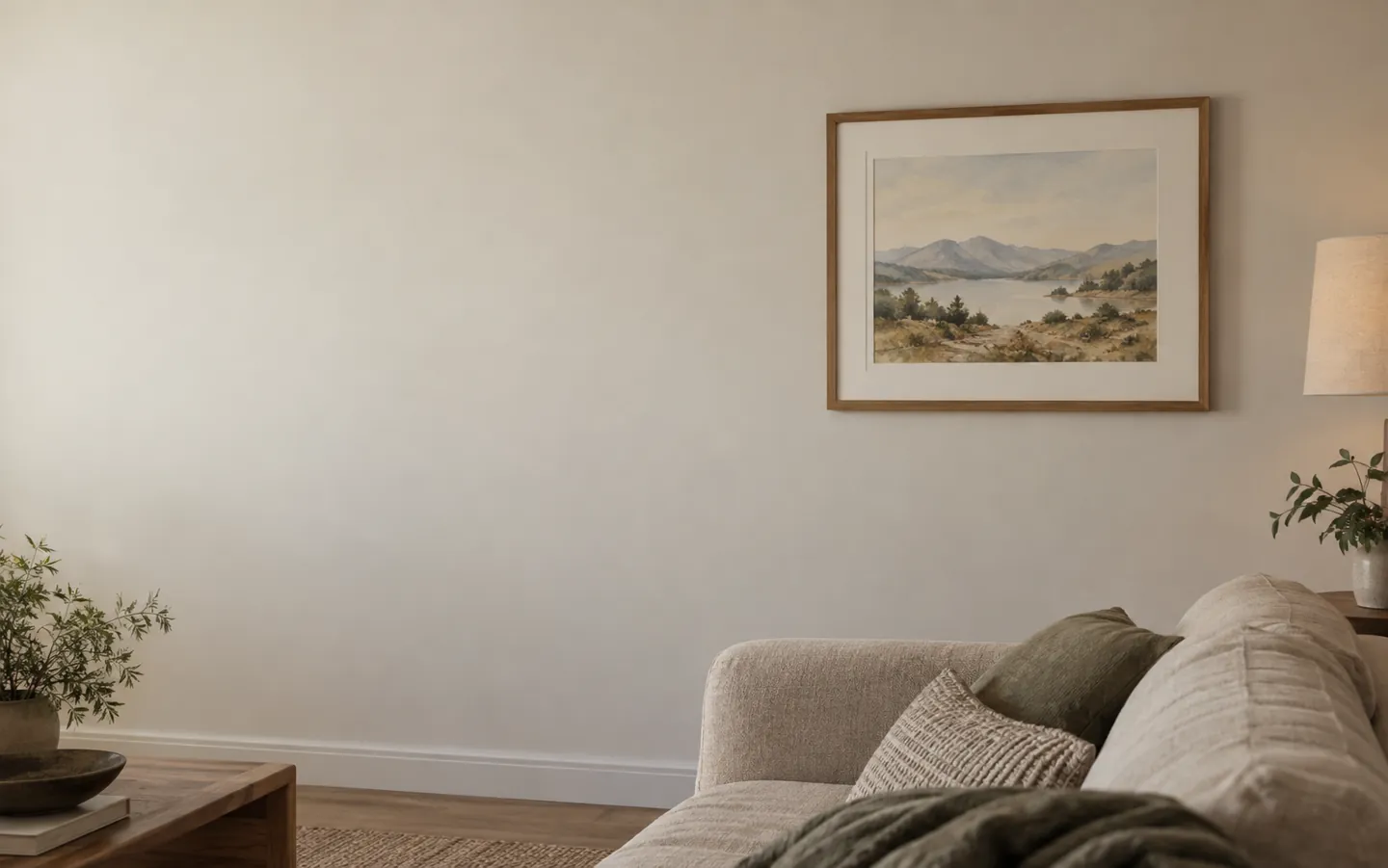
On an inside wall, out of direct sunlight and away from radiators, fireplaces, spotlights and air vents. Avoid damp cellars and uninsulated attics, and outside walls where condensation can form inside the frame.
What temperature and humidity are best?
The Institute of Conservation gives an ideal of 16°C to 19°C and 45% to 60% relative humidity. If that is hard at home, it advises keeping humidity low and stable, below 60%.